
How to Plan a Successful Product Launch Activation
Table of Contents
Define Your Product Launch Activation Objectives and Business Goals
Identify Your Target Audience and Build User Personas
Conduct Market Research and Competitive Analysis
Build Your Product Launch Marketing Plan
The budget categories that actually matter
Where the money actually goes
Pre-launch, during, and post-launch, with owners
Channel strategy that reinforces itself
Lead capture and follow-up
Choose Your Product Launch Activation Format
Create a Product Launch Timeline and Run-of-Show
The backward timeline, with owners
The run-of-show is a document, not a vibe
Staffing and roles
Contingencies you should actually plan for
Design Interactive Experiences and Live Demonstrations
Product Launch Event Checklist and Pre-Launch Preparation
Frequently Asked Questions
Last Updated: October 14, 2026
Define Your Product Launch Activation Objectives and Business Goals
A successful product launch activation starts with clear objectives. Before you design anything or book a venue, define what success looks like.
Most teams skip this and jump straight to "What should the booth look like?" That gap is where activations fail.
Here's what to define:
Primary business goal (lead generation, awareness, sales, adoption, media coverage)
Target outcome metrics (number of leads, social posts, attendees, conversions)
Budget range (this shapes every decision that follows)
At Breakthrough Productions, we work backward from the business goal. A beautiful activation that doesn't drive leads is an expensive prop; a focused one that generates qualified prospects gets funded again next year.
Document your objectives in writing and share them with stakeholders. That becomes your North Star when decisions get tough.
Identify Your Target Audience and Build User Personas
You can't design an effective product launch activation without knowing exactly who you're reaching.
Audience definition goes deeper than "marketing professionals." Know who will actually stop, what they care about, what problems they're solving, and what message makes them pause.
Build 2-3 detailed user personas. For each one, document:
Job title and role (what do they do day-to-day?)
Industry and company size (startup, enterprise, specific vertical?)
Current challenges (what keeps them up at night?)
Your activation should speak directly to these personas.
Ask: Would this person stop? What would make them engage and remember us?
Conduct Market Research and Competitive Analysis
Understanding your market landscape prevents you from building an activation that misses the mark.
Start with competitive research: who else is launching similar products, what activations and messaging are they running, and where are the gaps? This isn't about copying, it's about differentiating.
Look at:
Competitor messaging (what claims are they making?)
Their activation formats (booths, pop-ups, events, digital experiences?)
Audience response (what's getting engagement, shares, coverage?)
Research your audience directly. Understand the venue: at a trade show, study floor layout, traffic patterns, and competitor booth locations; for a pop-up, research foot traffic, demographics, and what other brands are doing there.
Build Your Product Launch Marketing Plan
Your activation is one line item in a larger launch budget. Get the structure right before you get creative.
The budget categories that actually matter
Most launch budgets get blown by categories nobody plans for. Structure yours so nothing surprises you:
1. Concept and design
Creative development, renderings, engineering drawings
Revisions (budget for at least two rounds)
2. Fabrication and production
Millwork, CNC, metal, acrylic, soft goods
Finishes, paint, laminate, upholstery
Electrical, lighting, AV integration
3. Logistics
Crating and packing
Freight (outbound and return)
Drayage at the venue or show
4. On-site labor
Installation and dismantle (I&D) labor
Rigging
Venue-mandated labor (many venues require union labor for certain tasks)
5. Venue and event costs
Space rental or booth space
Power, internet, water
Permits, insurance, COI
6. Marketing and amplification
Pre-launch content and paid media
Influencer or creator partnerships
PR and media relations
7. Staffing and travel
Brand ambassadors or trained staff
Flights, hotels, per diems
Training time before the event
8. Contingency
10-15% of total budget, held back and not spent unless needed
Pro Tip Ask your fabrication partner for a line-item estimate, not a lump sum. You can't prioritize what you can't see.
Where the money actually goes
For a custom activation, fabrication and production usually consume the largest share, followed by logistics and labor, then marketing. If marketing outspends fabrication, you may be driving traffic to an experience that can't hold up.
Design decisions have budget consequences. A modular build that packs into fewer crates cuts freight and drayage. A design that installs with two people in four hours costs less than one needing six people and a forklift.
Pre-launch, during, and post-launch, with owners
Pre-launch (4-8 weeks out)
Teaser content and email sequences, owner: marketing lead
Media and analyst briefings under embargo, owner: PR
Influencer/creator outreach and contracts, owner: partnerships
During activation
Real-time social posting, owner: content lead
Lead capture and qualification, owner: on-site lead
Media interviews and demos, owner: PR
Post-launch (1-8 weeks after)
Lead routing to sales within 24-48 hours, owner: sales ops
Follow-up email sequence, owner: marketing
Content repurposing (case study, video, social), owner: content
Channel strategy that reinforces itself
Don't run channels in silos. The strongest plans have each channel feeding the next:
Email warms your list before the activation and nurtures leads after
Social teases the activation, captures content during, and extends reach after
PR builds credibility that makes the activation worth attending
Lead capture and follow-up
This is where most activations leak value. A lead not followed up within 48 hours is one you paid for and didn't convert. Decide before the event:
What information you're capturing (badge scan, form, QR code)
Where it goes (CRM, spreadsheet, marketing automation)
Who owns follow-up and by when
Key Takeaway A launch marketing plan isn't a calendar of activities. It's a budget, a set of owners, and a follow-up mechanism. If any of those three is missing, the plan isn't done.
Have a budget but not a concept? Let's work backward from the number. Send us the range and the goal, and we'll tell you what's realistic to build.
Choose Your Product Launch Activation Format
The format shapes everything: budget, timeline, logistics, reach, and impact.
Common formats include:
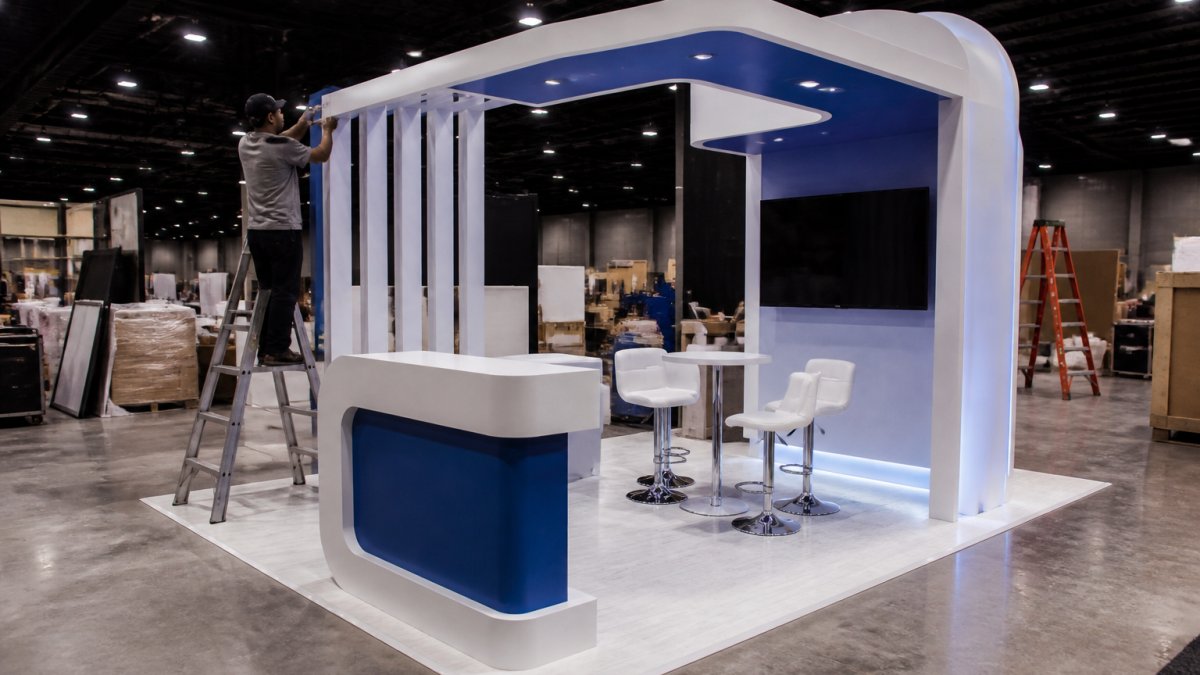
Trade show booth (reach industry professionals in one place)
Pop-up activation (temporary retail or experience in high-traffic location)
Experiential event (hosted event with live demonstrations, speakers, networking)
Your choice depends on:
Your target audience (where are they? How do you reach them?)
Your budget (some formats scale better than others)
Your timeline (some require more lead time than others)
A product launch activation doesn't need to be massive. A focused pop-up in the right location with the right audience often outperforms a sprawling event that reaches the wrong people.
At Breakthrough Productions, we help brands choose the format that serves the business goal, sometimes a custom trade show booth, sometimes a smaller, targeted pop-up.
Create a Product Launch Timeline and Run-of-Show
Most launch timelines fail because they're built forward from "when we want to launch" instead of backward from the day freight hits the dock. Work backward from your activation date and treat every milestone as a dependency.
The backward timeline, with owners
Milestone | Typical lead time | Owner | Depends on |
Objectives, budget, and success metrics locked | 16-24 weeks out | Marketing lead | Stakeholder sign-off |
Concept and format selected | 14-20 weeks out | Brand/experiential lead | Budget approval |
Design development and engineering review | 10-16 weeks out | Creative + fabrication partner | Concept approval |
Final design approval and deposit | 8-12 weeks out | Marketing lead | Engineering feasibility |
Fabrication and production | 4-12 weeks out | Fabrication partner | Approved drawings, materials lead times |
Graphics production | 3-5 weeks out | Graphics vendor | Final copy and brand approvals |
Venue/event paperwork (COI, rigging, labor, drayage) | 4-8 weeks out | Event manager | Venue deadlines |
Shipping and crating | 1-3 weeks out | Logistics lead | Fabrication complete |
Installation and setup | 1-3 days before | Install lead | Venue access window |
Pre-launch marketing push | 4-8 weeks out | Marketing lead | Creative assets ready |
Activation day | Day 0 | On-site lead | Everything above |
Breakdown, return shipping, storage | Day +1 to +2 | Logistics lead | Venue move-out window |
Two things kill timelines: late design changes and venue paperwork. A design change at week 6 of fabrication can cost more than the original build, and a missing certificate of insurance or rigging permit can stop your install cold. Lock both early.
Watch Out Venue and show deadlines are almost never negotiable. If your exhibit house or fabrication partner needs drawings by a certain date to hit a show's advance warehouse deadline, that date is your real deadline, not the show date.
The run-of-show is a document, not a vibe
Your run-of-show is the minute-by-minute script for activation day. Build it as a table with time, activity, owner, location, and what "done" looks like:
Time | Activity | Owner | Notes |
6:00 AM | Load-in, power drop, AV check | Install lead | Confirm rigging points, test all screens |
8:30 AM | Staff briefing and role assignments | On-site lead | Review personas, talking points, lead capture |
9:30 AM | Doors open | Greeter | First demo queued |
10:00 AM | Live demo #1 | Demo lead | 3-5 minutes, Q&A after |
11:00 AM | Demo #2 | Demo lead | Rotate staff for breaks |
12:00 PM | Peak traffic push | All staff | Lead capture focus |
2:00 PM | Demo #3 | Demo lead | Capture social content |
4:00 PM | Last demo, wind-down | Demo lead | Begin lead reconciliation |
5:00 PM | Doors close, debrief | On-site lead | Note what worked, what didn't |
6:00 PM | Breakdown begins | Install lead | Follow venue move-out rules |
Staffing and roles
You need more people than you think, and they need defined jobs. At minimum:
On-site lead, owns the run-of-show, makes real-time calls
Demo lead, runs the live demonstration, owns the script
Greeter/flow, pulls people in, manages traffic at peak
One person cannot do all of these. If your team is small, hire or borrow support for the day.
Contingencies you should actually plan for
Demo tech fails, have a printed backup, a video loop, and a staff member who can talk through the product without the screen
Attendance is lower than expected, have a plan to pull traffic from adjacent areas or partner booths
Attendance is higher than expected, have a queue system and a second lead-capture station ready
A run-of-show in a shared doc, reviewed the morning of, is worth ten that live in someone's head.
Key Takeaway If you can't hand your run-of-show to a stranger and have them run the day, it isn't finished. Build it that way.
Planning an activation and want a second set of eyes on your timeline? Send us the date and the venue, we'll tell you what's realistic.
Design Interactive Experiences and Live Demonstrations
The difference between an activation people walk past and one they engage with is experience design.

Interactive elements that work:
Product trial stations (let people use your product, not just see it)
Live demonstrations (show how it works, solve a problem, create a moment)
Photo opportunities (give people something worth sharing on social)
The key is relevance. Interactive elements should connect to your product and audience's needs.
Live demonstrations are powerful. Someone showing how your product solves a real problem and answering questions beats a static display every time.
Design the experience to capture leads naturally: where people provide contact info, how it flows to sales, and how you follow up.
Product Launch Event Checklist and Pre-Launch Preparation
The week before your activation, use a detailed checklist so nothing falls through the cracks.
Two weeks before:
Confirm all vendor deliveries and timelines
Brief your on-site team on the run-of-show
Test all AV, lighting, and interactive elements
One week before:
Confirm venue access, parking, loading dock details
Verify all materials have arrived
Test lead capture technology
Day before:
Conduct full setup and walkthrough
Test all interactive elements and demonstrations
Confirm signage is clear and compelling
Day of:
Arrive early for final setup and checks
Brief team 30 minutes before doors open
Monitor lead quality and capture process
Your activation is the result of weeks of planning. A detailed checklist turns that work into a smooth, professional experience that drives business results.
The activation isn't the goal. The conversations, leads, awareness, and product adoption are. Design and prepare accordingly.
Frequently Asked Questions
How far in advance should you plan a product launch activation?
Start planning 4-6 months before your launch date. This timeline allows for market research, creative development, vendor selection, fabrication, logistics coordination, and team alignment. If your activation includes custom builds, interactive displays, or multi-city rollouts, add 2-3 months. Tight timelines are possible but reduce flexibility and increase risk of rushed execution.
What should a product launch activation plan include?
A complete plan covers: clear business objectives, target audience personas, competitive landscape analysis, activation format and venue, detailed timeline with roles and ownership, budget breakdown, creative concept, interactive elements, measurement framework with KPIs, contingency plans, and post-launch follow-up strategy. The plan should align creative vision with real-world logistics, fabrication timelines, shipping, installation requirements, and team capacity.
How do you measure the success of a product launch activation?
Define success metrics before launch: attendance, qualified leads generated, social media impressions and engagement, media coverage, product samples distributed, email list growth, conversion rate to purchase, customer feedback sentiment, and brand awareness lift. Track metrics during the event and analyze results within two weeks of completion. Compare results against your original objectives to understand ROI and inform future activations.
What makes a product launch activation engaging?
Engagement comes from clear value proposition communication, hands-on product interaction, visual design that stops people, trained staff who listen and answer questions, photo opportunities that encourage social sharing, live demonstrations that show real product benefits, and personalized interactions based on visitor interest. Avoid passive displays. Every element should invite participation, create a reason to stay, and give visitors something memorable to share.
Already have a concept for your product launch activation? Breakthrough Productions can help you design, build, and execute it. We specialize in turning ambitious activation ideas into real-world experiences that drive results. From custom trade show booths to pop-up experiences to full-scale brand activations, we handle the design, engineering, fabrication, logistics, and installation. Let's talk about what you're trying to accomplish.
LET'S START SOMETHING AMAZING

Comments