
Trade Show Booth Installation Labor Planning: Crew, Hours, and Costs
Last Updated: November 3, 2026
Quick Summary
Trade show booth installation labor planning means matching crew size, hours, and cost to the booth you actually built, before you ship it. Estimate install hours by booth type, book install and dismantle labor together, and add 10 to 15 percent buffer hours to cover surprises.
A 10x20 inline booth typically needs 2 crew for 3 to 5 hours.
Dismantle usually runs 60 to 75 percent of install time, so book it with install.
Submit your labor order 6 to 8 weeks before move-in to avoid overtime rates.
Add 10 to 15 percent buffer hours and keep one crew member in reserve.
Walk the booth against the drawings and sign off before the crew leaves.
Table of Contents
Trade Show Labor Management: Crew Sizing and Hour Estimation
Custom Exhibit Installation Planning: The Timeline and Decision Deadlines
Trade Show Drayage and Labor Costs: What Actually Drives the Bill
Packing, Shipping, and Move-In Schedules That Protect Your Crew
Contingency Planning for Labor Overruns and On-Site Surprises
Why Installation Labor Planning Decides Your Show
Most exhibitors spend months on booth design and almost no time on the crew that puts it up. Then move-in day arrives, the labor invoice runs long, and the schedule collapses.
Labor is billed by the hour with minimums attached. A booth that needs six crew members instead of four, or four extra hours instead of two, changes your budget and your move-in window at once.
The good news: labor is predictable. You just have to plan it before the crates leave the shop.
Trade Show Labor Management: Crew Sizing and Hour Estimation
Trade show labor management starts with two numbers: how many people you need and how long they will work. Both flow from booth size, complexity, and the rules of the hall. General exhibition industry guidance from the Exhibitor Appointed Contractor Association treats installation and dismantle labor as a scheduled service with minimums, so guessing is expensive.

Estimating Installation Hours by Booth Type
Use these ranges as a starting point, then adjust for your drawings. They assume a standard inline or island build with normal graphics and lighting.
10x10 pop-up or portable: 1 to 2 crew, 1 to 2 hours
10x20 inline: 2 crew, 3 to 5 hours
20x20 island: 3 to 4 crew, 6 to 10 hours
Dismantle usually runs 60 to 75 percent of install time. Packing takes longer than people expect.
Building a Labor Planning Worksheet
Build a one-page worksheet before you request labor. It keeps everyone honest.
Field | What to Enter | Why It Matters |
Booth size | Square footage and layout | Sets crew size |
Exhibit system | Modular, custom, or rental | Drives assembly time |
Crates | Count and weight | Affects handling and drayage |
Install hours | Estimate from drawings | Sets labor order |
Crew size | People per shift | Meets minimums |
Dismantle hours | 60-75% of install | Books move-out labor |
Contingency | Buffer hours | Covers surprises |
Watch out: ordering labor for the install but forgetting to book dismantle crew is a costly mistake. Book both at the same time.
Custom Exhibit Installation Planning: The Timeline and Decision Deadlines
Custom exhibit installation planning works backward from move-in day. Every decision has a deadline, and missing one pushes everything downstream into rush fees, expedited freight, or a labor order built on guesses. Most show manuals publish their own deadlines for labor orders, EAC registration, advance warehouse freight, and on-site badge pickup, and those dates vary by venue and show. Anchor each step below to the show's published dates rather than a fixed calendar.
Breakthrough Productions
The Working Backward Timeline
Window before move-in | Decision or deliverable | Who owns it | What happens if it slips |
16-20 weeks | Design freeze: final drawings, installation instructions, electrical and rigging plan | Exhibit designer / fabricator | Fabrication compresses; test-fit gets skipped; labor estimate becomes a guess |
12-16 weeks | Fabrication and finish; test-fit and pre-wire lighting and AV | Fabrication shop | Shipping date moves; advance warehouse window may be missed |
10-12 weeks | Crate plan and packing list drafted; weights and dims confirmed | Fabrication / logistics | Material handling estimate is wrong; drayage billed on bad numbers |
8-10 weeks | EAC selected and notified to show management; certificate of insurance submitted | Exhibitor / EAC | Crew turned away at the dock; venue labor forced on you |
6-8 weeks | Labor order submitted: crew size, hours, straight time vs. overtime, install and dismantle | Exhibitor / EAC | Late orders hit minimums and overtime; crew availability shrinks |
4-6 weeks | Freight booked; ship to advance warehouse or direct to show site | Logistics | Direct-to-site arrivals miss the target window; off-target freight gets surcharged |
2-3 weeks | Move-in schedule confirmed; on-site contacts exchanged; badges and wristbands ordered | Exhibitor / EAC | Crew waits at registration while the clock runs |
Move-in day | Install per drawings; punch list and sign-off before floor opens | Install crew lead | Rework eats show hours; electrical inspection delays opening |
What Each Deadline Actually Protects
The design freeze matters most because everything downstream depends on it. A late freeze forces rushed fabrication, which can force a labor order written before anyone knows how the booth assembles.
The EAC and insurance deadline is the one exhibitors most often miss.
The labor order deadline protects your rate.
Watch out: treating the advance warehouse deadline as flexible. Freight that arrives after the published cutoff is typically accepted only at a higher rate or refused, and a refused crate means no booth on move-in day.
A Simple Way to Build Your Own Timeline
Open the show's exhibitor manual and pull four dates: the advance warehouse freight deadline, the EAC notification deadline, the labor order deadline, and the move-in start time. Work backward from move-in start, not from the show opening. Place your design freeze, fabrication complete, and ship date so each lands before its dependent deadline with at least a week of slack. If any step has less than a week of slack, compress that step first, not the install schedule.
If you are still choosing between an in-house crew and an outside installer, our comparison of outsourcing event installation vs in-house teams covers how each option changes these deadlines.
Trade Show Drayage and Labor Costs: What Actually Drives the Bill
Trade show drayage and labor costs come down to a few levers: weight, crate count, crew size, hours, and the rate schedule. Strategic decisions regarding trade show booth design also influence how effectively your display captures attention once the installation is complete and the floor opens.
The biggest drivers:
Weight and crate count: fewer, lighter crates cut handling charges.
Crew size and minimum hours: most halls bill a minimum per worker.
Overtime: late or early calls carry premium rates.
You can cut weight and crate count at the design stage. See how lighter materials and fewer crates shrink the bill in our guide to exhibit design moves that cut drayage costs.
Union Rules, EACs, and Show Management Paperwork
Union rules, EACs, and show management paperwork determine who can do what on the floor. An exhibitor-appointed contractor is a third-party labor or installation company you hire instead of the venue's official contractor.
Confirm three things early: whether the venue requires union labor, what your EAC must submit, and which forms show management needs. Our overview of venue regulations for custom installations covers the rules that affect install labor.
Packing, Shipping, and Move-In Schedules That Protect Your Crew
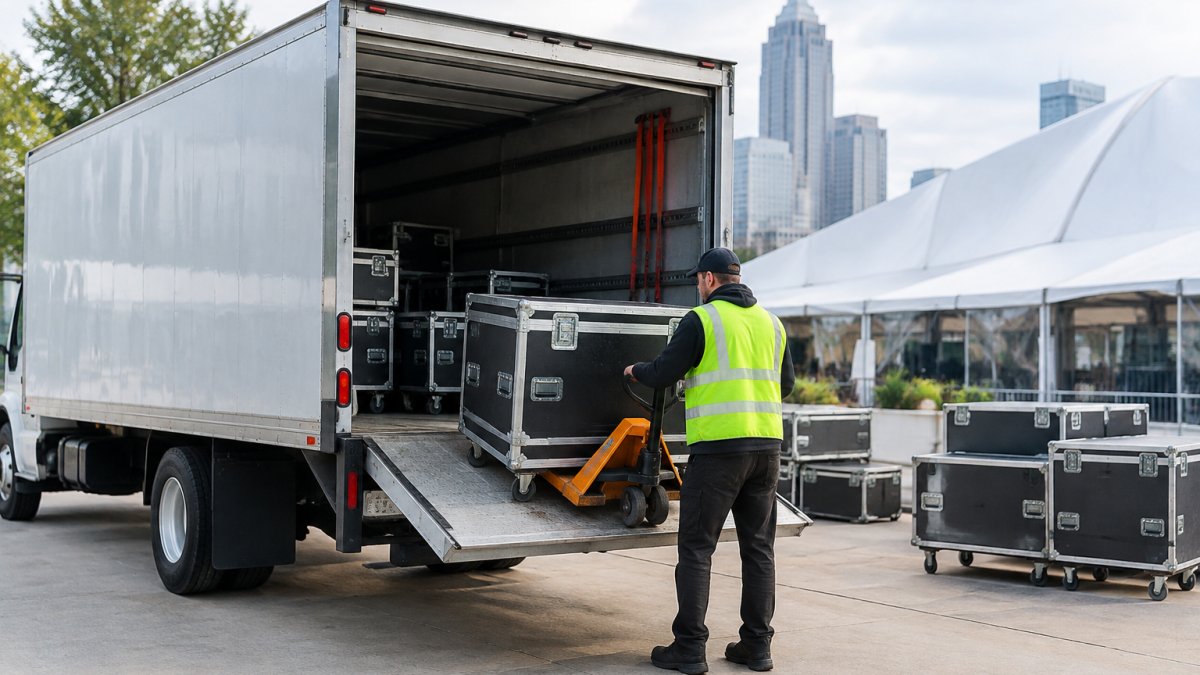
Packing and shipping decide how fast your crew can work. A clean packing list, labeled crates, and clear setup drawings turn a chaotic install into a smooth one. Crews lose hours hunting for the right bolt because crate three was mislabeled.
Protect your crew with these habits:
Number every crate and match it to the packing list.
Include setup drawings and hardware in the first crate opened.
Ship to the advance warehouse when you can, so materials arrive on time.
Move-out deserves the same care. Book dismantle labor early and stage crates for a fast teardown.
Contingency Planning for Labor Overruns and On-Site Surprises
Contingency planning separates a calm install from a fire drill. Parts arrive damaged. A crate goes missing. A rigging crew runs behind. Electrical rough-in is not where the drawings said it would be. The plan should assume at least one surprise and give the on-site lead a clear way to handle it without calling the marketing team every ten minutes.
The Four Overruns That Actually Happen
Most labor overruns trace back to one of four causes, and each has a different fix:
Freight delay or misdirected crate. The crew arrives, the crates do not. The fix is a target arrival window confirmed with the carrier and a plan for the first two hours if crates are late, usually staging tools and checking the floor plan against the actual space.
Missing or damaged parts. A graphic arrives creased, a connector is missing, a panel is cracked. The fix is a spare-parts kit shipped with the booth and a named contact at the fabrication shop who can overnight a replacement.
Scope creep on site. Someone decides the counter should move, or a monitor needs to be added. The fix is a written rule: changes go through the exhibitor's on-site lead, and any change that adds hours gets logged against the labor order before the crew starts it.
Buffer Hours and Crew Reserve
A common pattern is to add 10 to 15 percent buffer hours to the labor order and keep one crew member in reserve for the second half of the install. The buffer covers small surprises; the reserve covers the moment when two problems land at once. Buffer hours are cheaper than overtime hours, and both are cheaper than a booth that is not finished when the floor opens.
The Escalation Ladder
Give the on-site lead a short, written escalation path so decisions do not stall:
Crew lead handles anything inside the buffer, a missing bolt, a re-hung graphic, a moved counter.
Exhibitor on-site contact approves anything that adds hours beyond the buffer or changes the booth layout.
Show management or the general contractor is called for venue issues: electrical, rigging, floor weight limits, fire marshal questions.
Fabrication shop is called for damaged or missing parts that need a replacement shipped.
Each name and number should be on a single sheet, printed and taped inside the first crate opened, not buried in an email thread.
Sign-Off and the Punch List
Before the crew leaves, walk the booth against the drawings and write a punch list: graphics square and wrinkle-free, every light and monitor powered and tested, all connections secured, structure stable, no exposed cable, no leftover crates on the floor.
Watch out: letting the crew leave before sign-off. Once they are gone, small fixes can become new labor calls with new minimums.
If you are weighing outsourced crews against your own team, our comparison of outsourcing event installation vs in-house teams lays out the trade-offs. For a deeper look at preventing install failures, read our guide on preventing installation failures in trade shows.
Send Us Your Rendering and We'll Build the Labor Plan
Labor planning is where good design meets the loading dock. Breakthrough Productions can work from a finished rendering, a rough concept, or a set budget to help you understand what the install takes.
Send us your rendering and let's talk through what the install will take. Book a call with our team and get a labor plan built around your show.
Frequently Asked Questions
How do you calculate labor hours for a trade show booth installation?
Start with the booth's square footage, the number of structural components, and whether it is a modular display or a fully custom build. Walk the setup drawings and count every assembly step: crates to unload, walls to raise, lighting to hang, graphics to apply, and AV to test. Add time for material handling from the dock to the booth. Then multiply by your crew size and add a buffer for show-floor conditions. A labor planning worksheet that lists each task, the crew assigned, and the estimated hours keeps the number honest instead of a guess.
What is the difference between union and non-union labor at trade shows?
Many convention venues operate under union agreements, which means certain tasks such as forklift operation, electrical work, or rigging must be handled by union labor booked through show management. Non-union labor, including your own staff or an exhibitor-appointed contractor (EAC), can handle booth setup and teardown where the venue allows it. The rules vary by facility and by show, so confirm them with show management before you finalize your labor order. Getting this wrong can mean paying twice for the same task.
How can design choices reduce trade show installation labor costs?
Design for assembly, not just for looks. Modular exhibit systems with tool-free connections, pre-wired lighting, labeled crates packed in install order, and graphics that ship pre-mounted all cut hours on the floor. Fewer custom pieces means fewer crew members and less overtime. Bring your fabricator into the design conversation early so setup drawings, packing lists, and installation instructions are built alongside the booth, not after it. Labor savings start on the drawing board, not at the loading dock.
What should an I&D packet include?
An installation and dismantle packet should include setup drawings, a step-by-step assembly sequence, a packing list matched to crate numbers, a labor order with crew size and hours, the move-in and move-out schedule, venue and union rules, contact numbers for the exhibit house and on-site lead, and a sign-off sheet for post-installation quality control. Give the packet to your EAC and show management well before the show. A complete packet is the difference between a smooth install and a crew standing around guessing.
Planning labor is not glamorous, but it is the difference between a booth that opens on time and one that opens late. Bring us your drawings and your deadline, and we will build the plan that gets your exhibit standing and your team selling.
Comments